Thumbelina: What to Expect from Andersen's Longest Tale
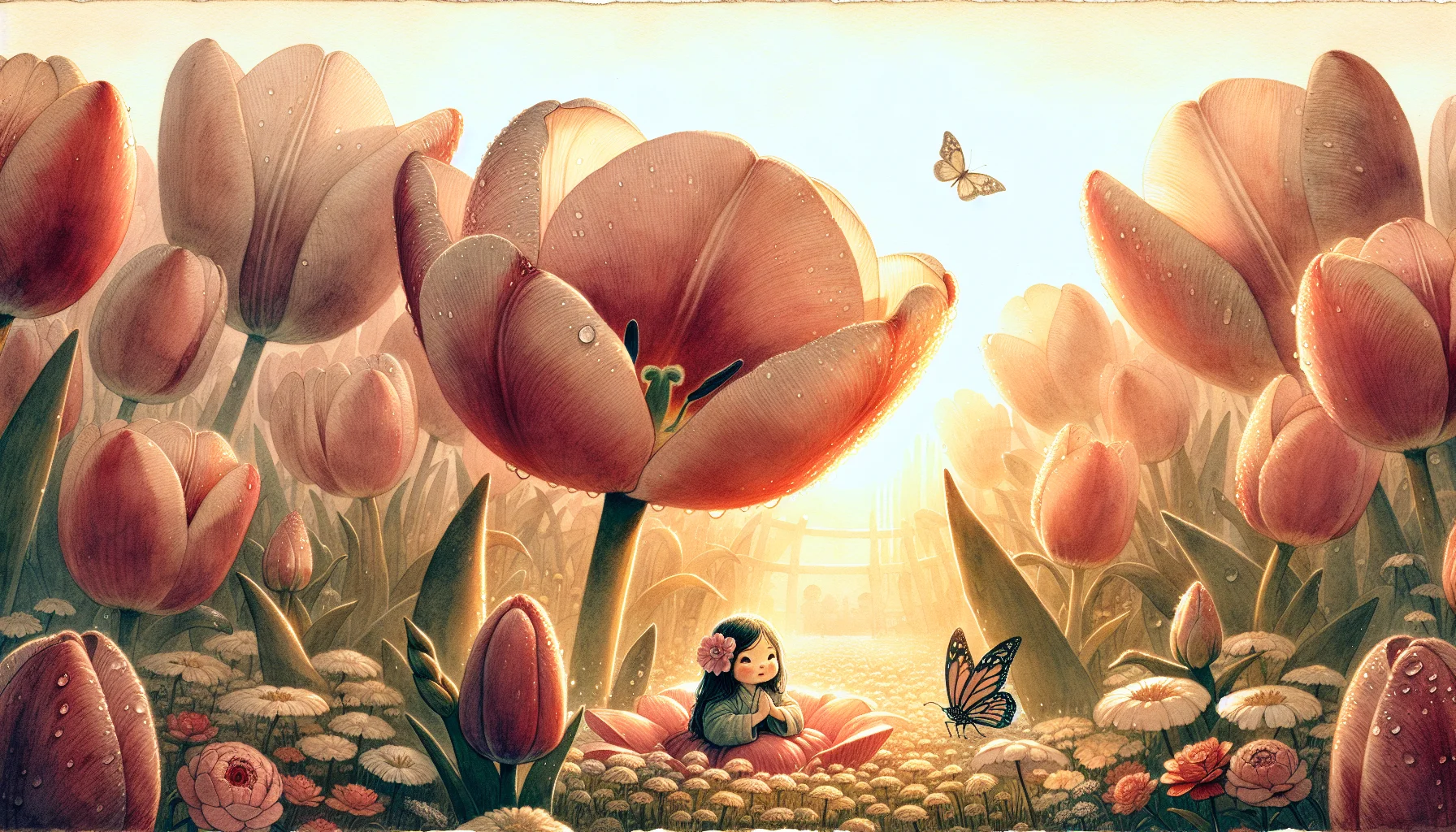
Hans Christian Andersen published "Thumbelina" in 1835, the same year he introduced himself to the world as a fairy tale writer. The story follows a girl born from a flower, barely an inch tall, who is immediately kidnapped by a toad who wants her as a bride for her son. What follows is a series of escapes and forced situations, each stranger than the last, until Thumbelina finds her way to a place and a person that actually fit her.
The premise is fanciful in the way that very young children accept completely: of course a tiny girl hatches from a tulip, of course a toad would live under a stream bank with opinions about marriage. Andersen does not explain the world, he just describes it with confidence. That authority is part of what makes the story so easy to sink into.
What keeps it interesting past the age of five is that Thumbelina is not passive. She does not rescue herself through action exactly, but she makes choices. She refuses the mole. She stays with the swallow. She is pushed around by everyone who sees her as a useful object, and her persistence through that is what the story is quietly about.
What to expect
Thumbelina is suitable for ages 4 to 8. The youngest children who enjoy it are usually drawn in by the scale, the idea of a girl small enough to use a walnut shell as a cradle captures attention immediately. Older children in the 6-to-8 range tend to follow the social dynamics more: who is treating Thumbelina well, who is using her, and why.
Runtime is approximately 22 minutes, making it the longest of the Andersen tales in the catalog. It is still a single story with a clear arc, but at that length it runs closer to a short chapter book than a fairy tale sprint. That is not a drawback, it just means parents should know going in whether they want to do it in one sitting or split it.
The tone is warm and slightly comic for most of the story. The toad is pompous. The mole is self-satisfied. The fieldmouse is well-meaning but wrong about everything. There is gentle humor in how Andersen draws these characters, which gives the narration a lot of texture to work with.
Why it works at bedtime
The episodic structure is what makes Thumbelina particularly flexible for bedtime. The story has natural stopping points: the escape from the toad, the arrival at the fieldmouse's home, the mole's underground world. A parent who wants to do it across two nights can pause when Thumbelina reaches the fieldmouse and pick up there the next evening without losing momentum.
Each episode has its own small arc. Something happens, Thumbelina endures it or escapes it, and the scene closes. That rhythm works well for children who are drifting toward sleep, they get resolution at each stage rather than being suspended on a cliffhanger.
The ending is genuinely happy, and it arrives with enough warmth to close on well. The flower kingdom, the flower prince, Thumbelina getting her own name, it is a full landing, not an afterthought. Children who make it through the whole story feel the completeness of it.
Recording it
The two-minute voice sample you send is all we need to produce the full narration. There is no preparation required, just read a paragraph naturally, or tell us a short story in your own words.
Thumbelina has more character variety than most short fairy tales. The toad, the mole, the fieldmouse, the swallow, each one has a distinct personality in the text. A narrator who lets those differences come through slightly, without doing full character voices, gives the story a lot of life. We do not coach narrators or ask for multiple takes. We use your natural voice and build the production around it.
At 22 minutes, this is also a good choice if you want the story to last. A grandparent who wants their grandchild to have something that takes more than one night to finish will find Thumbelina sits right at that threshold, long enough to feel like an event, short enough to complete in a weekend.
A note on this version
The most familiar modern version of Thumbelina is the 1994 Don Bluth animated film, which changed the story significantly. The film adds a villain (a bat), removes the mole subplot, and gives the story a more conventional romantic arc with a fairy prince introduced early on.
Andersen's original mole is not a villain, he is a suitor Thumbelina is pressured to accept because he is wealthy and stable. That is a more complicated situation than a straightforward antagonist, and it is part of what gives the story its real texture. The original is also darker in the middle: Thumbelina spends a cold autumn and winter in genuine hardship before the swallow rescues her.
If your child knows the animated film, it is worth a brief mention that this version follows Andersen's original more closely. The shape of the story is the same, but the details and the emotional weight are different in ways children often find more interesting, not less.