The Ugly Duckling: What Parents Should Know About the Original Story
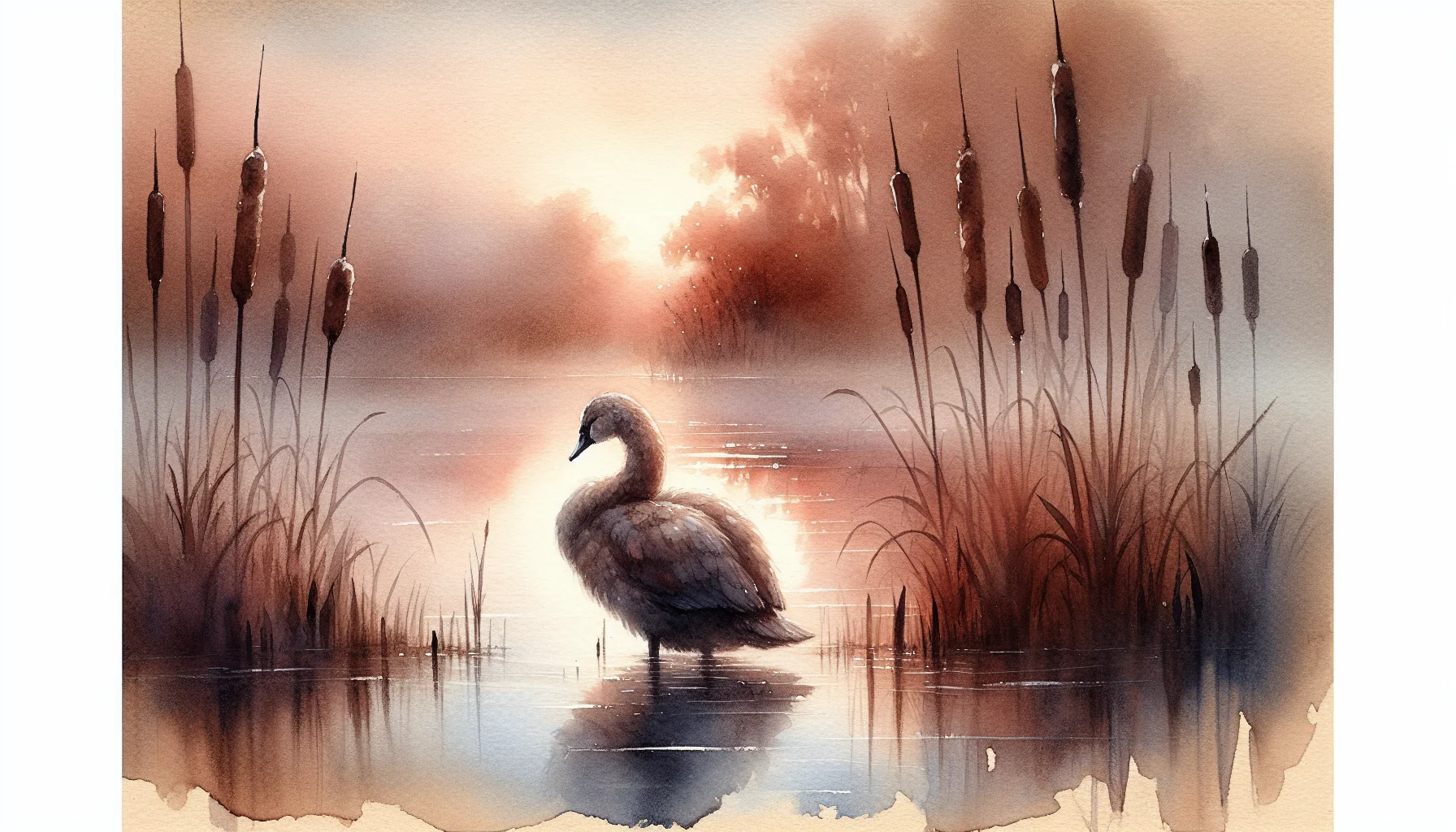
Hans Christian Andersen published "The Ugly Duckling" in 1843, and he put more of himself into it than almost anything else he wrote. He grew up poor and awkward in a small Danish town, mocked for his appearance and his ambitions, and he carried that experience for the rest of his life. The story is partly autobiography, and that personal weight is part of why it still reads as true rather than just instructive.
The duckling hatches into a family where he does not belong. He is bigger than his siblings, gray where they are yellow, and the whole barnyard lets him know it. He spends the story surviving, driven from place to place, cold and alone through a long winter, until spring arrives and he sees his reflection in the water for the first time.
It is a story about endurance as much as transformation. The duckling does not do anything to become a swan. He simply survives long enough to become what he already was. For a child who feels out of place, that distinction matters.
What to expect
The story works well for ages 4 to 8. Younger children follow it easily because the emotional logic is clear: the duckling is treated badly, and it is not fair. Older children in the 6-to-8 range often pick up the more layered idea, that the duckling was never actually wrong, just in the wrong place.
Runtime is approximately 18 minutes. Like most of the Andersen tales in the catalog, it sits right in the sweet spot for bedtime: a complete story with room to breathe, done before anyone falls asleep mid-sentence.
The tone is quieter than you might expect if you know the story only from adaptations. Andersen does not editorialize much. He lets the duckling's loneliness speak for itself, which gives a good narrator real room to work with.
Why it works at bedtime
The structure is naturally episodic. The duckling moves from the barnyard to the marsh to the old woman's cottage to the frozen lake. Each stop is a short scene. That rhythm, arrive somewhere new, face something hard, move on, keeps the pacing steady without feeling rushed.
The winter section, where the duckling nearly freezes and is rescued by a farmer, is the darkest part. It passes quickly and resolves without trauma. Children who are still awake at that point are usually listening hard, not anxious.
The ending is genuinely joyful without being loud about it. The duckling bows his head, expecting more cruelty, and sees a swan looking back. It is a quiet moment, and a good narrator can make it land without over-playing it. Children go to sleep with that image, which is a fine one to close on.
Recording it
The two-minute voice sample your family sends is all we need. We match the voice and produce the full narration from there.
This story is a particularly good fit for grandparents recording for a grandchild who has ever felt left out, starting school somewhere new, navigating a sibling dynamic, going through a hard stretch. The story does not lecture about belonging. It just shows it. That tends to come through more powerfully when the voice is someone the child already trusts.
The narration does not require much dramatic range. The emotion is in the language itself. Reading it steadily, without rushing through the sad parts, is all it takes. We handle everything else in production.
A note on this version
Most modern adaptations of The Ugly Duckling lighten the lonely middle considerably. Some turn it into a cheerful adventure. Andersen's original holds the sadness longer, the duckling is genuinely miserable for much of the story, and that is the point.
The original also does not explain why the swan egg ended up in the duck's nest. It is simply a fact of the story. There is no villain, no deliberate cruelty from the universe. Things were just arranged wrong. Children tend to accept that without needing it resolved, and it is actually more honest to how misfit experiences feel in real life.
Andersen wrote it knowing what it felt like to spend years waiting to be recognized for what you actually were. That knowledge is in the story. It is worth reading in the original.