The Little Mermaid: What Parents Need to Know About the Original Story
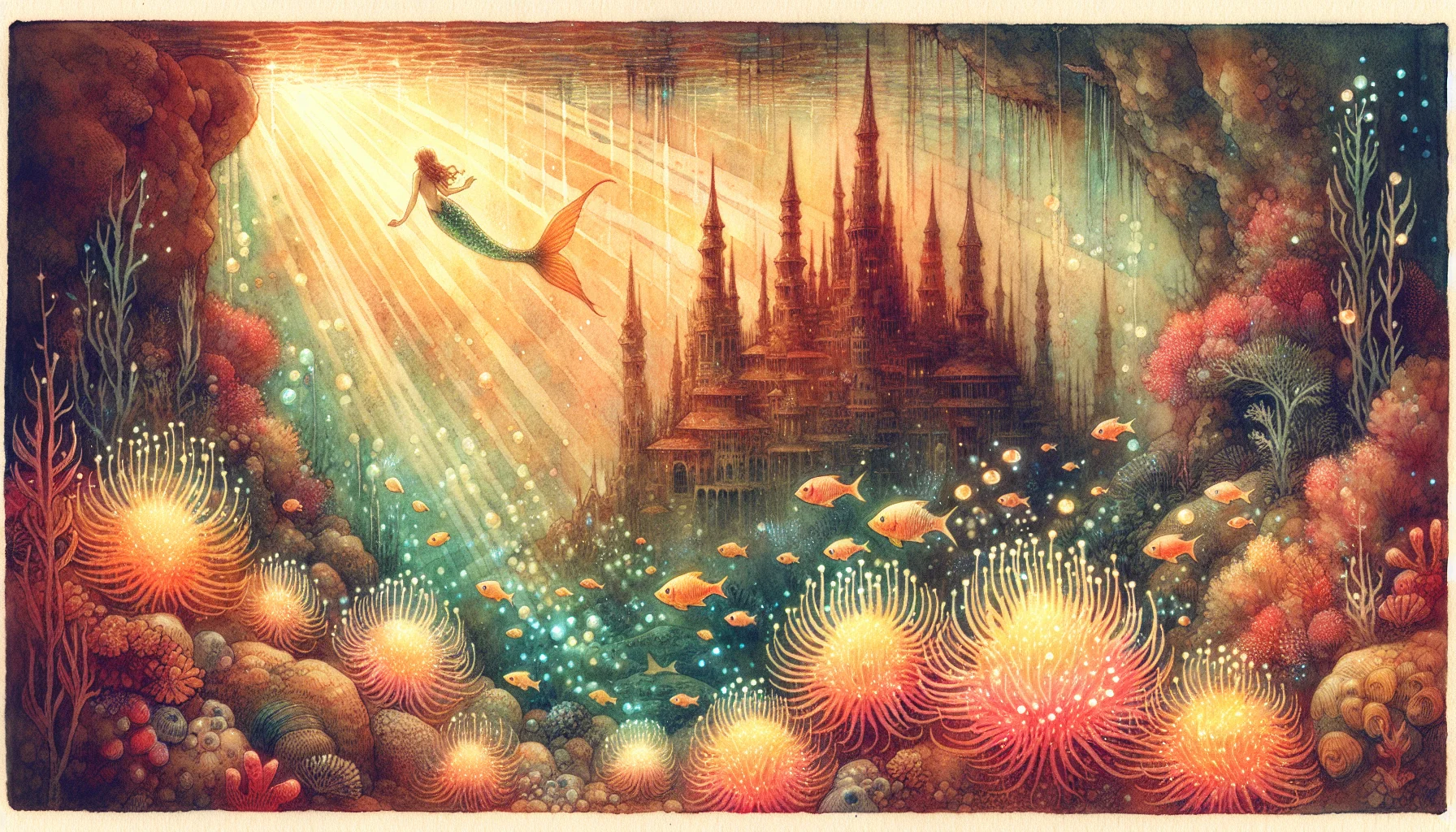
Hans Christian Andersen published "The Little Mermaid" in 1837, and it has been read aloud to children every night since. The story follows a young mermaid, the youngest of six princesses, who becomes fascinated with the human world above the waves. She falls in love with a prince she rescues from a shipwreck, and makes a desperate bargain to join him on land.
What makes the story last is not its plot mechanics but its feeling. Andersen wrote about longing with unusual precision. The mermaid does not just want the prince, she wants a soul, an inner life, the kind of permanence she believes only humans carry. That combination of romantic love and existential yearning is why adults who read it alongside their kids find themselves unexpectedly moved.
It is also one of the shorter Andersen tales, which makes it a natural single-session bedtime story. You can start it and finish it in one sitting, and it leaves a strong emotional impression without going on too long.
What to expect
The story is well-suited for children ages 5 to 9. The language in a good reading is lyrical but clear, and the core idea, a girl who gives up something precious for a chance at something she loves, is one children grasp immediately.
Runtime is approximately 18 minutes. That puts it comfortably in bedtime range: long enough to feel like a proper story, short enough that it does not drag past the point where kids stay awake.
The tone is gentle and dreamlike for most of its length. There are sad moments, but nothing frightening. The sea descriptions are lush. The court scenes above the water have a fairy-tale warmth. The emotional weight builds slowly and lands at the end, which is the right structure for a bedtime story.
Why it works at bedtime
The pacing is steady. Andersen does not rush. He spends real time in the underwater palace, with the mermaid's grandmother and her five sisters, before the story pushes forward. That unhurried opening is good for winding down, children settle into it rather than chasing it.
The middle section, where the mermaid arrives on land and tries to win the prince's heart, has a gentle melancholy that is not distressing to listen to. It is more like watching someone try very hard at something difficult. Children recognize that feeling.
The story ends on an image of transformation and release rather than pure grief, which is important. Children who ask "what happened to her?" at the end are usually satisfied by a calm, honest answer. It is a story that invites conversation, not one that leaves kids unsettled.
Recording it
The recording your family sends us is two minutes of natural speech, a grandparent reading a paragraph, a parent telling a short story, whatever feels comfortable. We use that to match the voice and produce the full narration. You do not need to perform or prepare anything special.
For grandparents, this story is a good fit. The language is warm but not demanding, and the emotional register, love, longing, wanting something better for someone you care about, resonates for older narrators in a way that comes through in the voice.
One thing worth knowing: the ending requires a quiet, steady delivery. It is not sad in a raw way, but it is not cheerful either. If the narrator reads it with care rather than rushing to reassure the listener, it lands beautifully. We handle all the production, so this is just context for what the story asks of the voice telling it.
A note on this version
Andersen's original is not the Disney film. The differences are significant enough that parents should know going in.
In the original, the mermaid does not get the prince. He marries someone else. She is given a chance to save herself by killing him, and she refuses. She dissolves into sea foam at dawn. The story then offers a gentler resolution, she becomes a spirit of the air, earning a soul through centuries of good deeds, but the loss is real and the ending is bittersweet, not triumphant.
Disney's 1989 film gave the story a happy ending and changed the central conflict considerably. If your child knows the film well, it is worth a brief mention before you start: "This is the original story Andersen wrote, and it ends a little differently." Most children take that in stride. Some find the original more interesting precisely because it is sadder. It is a good story to talk about afterward.