Glinda of Oz: Baum's Farewell to the Land He Loved
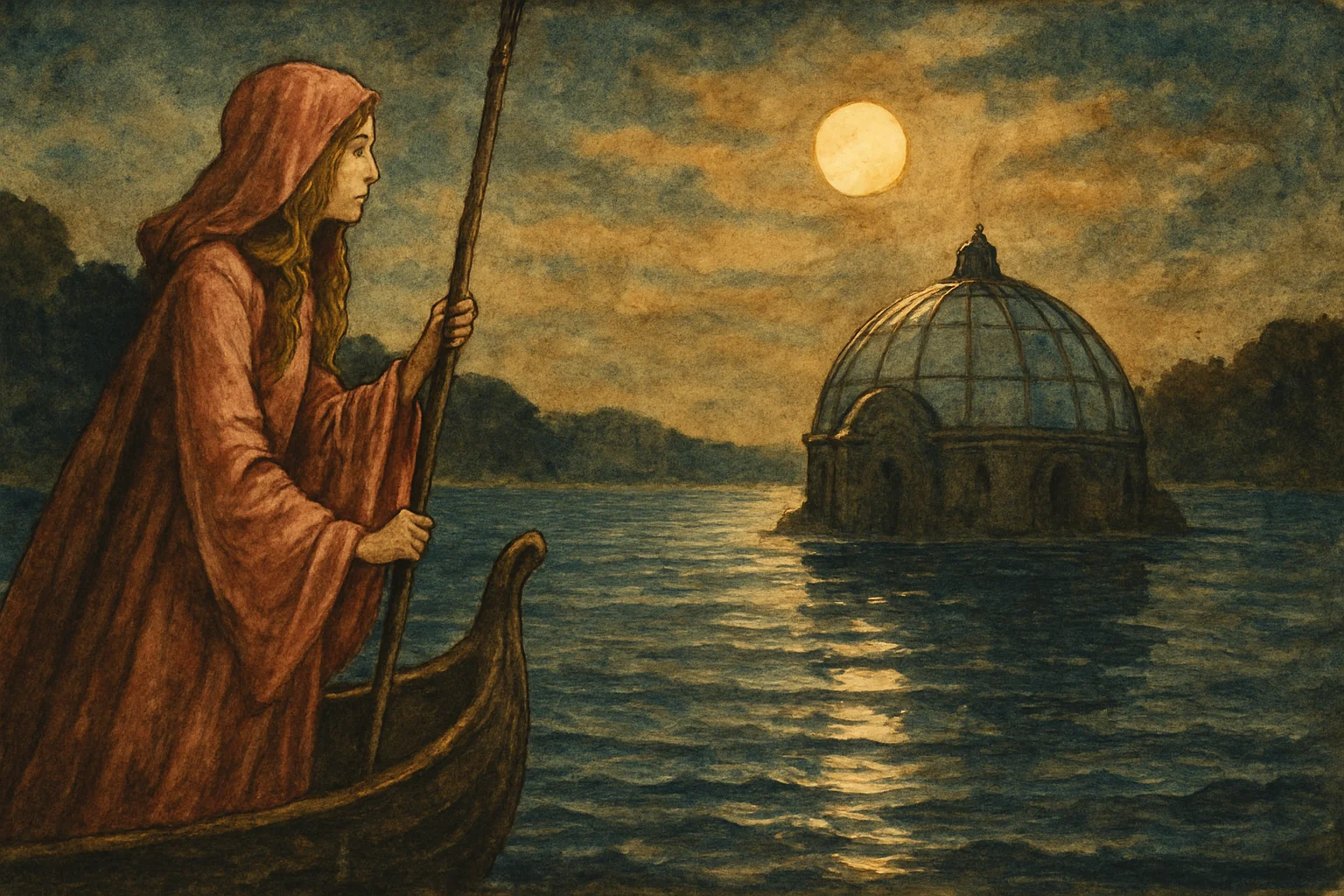
L. Frank Baum died on May 6, 1919. Glinda of Oz was published in July 1920. Between those two dates, the man who invented Oz wrote one last book about it — quieter, slower, and more reflective than almost anything else in the series — and left it for the world to find after he was gone. Reading Glinda of Oz with that knowledge changes it. What might otherwise seem like a minor entry in the series becomes something more resonant: a farewell letter to an imaginary country that had occupied twenty years of a man's life.
The Skeezers and the Flatheads
Ozma learns that two peoples in a remote corner of Oz — the Skeezers and the Flatheads — are on the verge of war. The Skeezers live on an island in the middle of a lake, inside a great glass dome that can be submerged beneath the water. The Flatheads live on a flat-topped mountain and are notable for carrying their brains in tin cans attached to their persons, rather than inside their skulls where brains normally live. They carry the cans in pockets and can lend their brains to each other, which leads to occasional complications. This is Baum at his most casually surreal, inventing impossible peoples with the same ease he brings to weather.
Ozma and Dorothy set out to make peace. Glinda, who has brought armies to Oz's defense before, agrees to come along. The expedition has the slightly autumnal feeling of older heroes undertaking one last journey — not grim, just measured, aware that some problems are genuinely difficult.
Queen Coo-ee-oh and the diamond swan
The Skeezer queen, Coo-ee-oh, is vain, powerful, and entirely unwilling to make peace with anyone who has not first acknowledged her supreme greatness. She learned her magic from three Adepts — wise women who taught her everything she knows — and then transformed them into fishes to keep them from revealing her secrets. When Ozma arrives to negotiate, Coo-ee-oh attacks. The battle goes against her, and in a moment of wild magical desperation, the spell that was meant to destroy her enemies turns on herself: she is transformed into a diamond swan. Beautiful, mute, incapable of magic, entirely unaware that she was ever human. The transformation is one of Baum's most striking images: a tyrant reduced to an exquisite ornament, still swimming in the lake she once ruled.
Trapped beneath the water
The crisis of the book is this: Coo-ee-oh, before her transformation, submerged the island — and only she knew the mechanism to raise it again. Glinda and Dorothy and all the Skeezers are now sealed inside a glass dome at the bottom of a lake, with no obvious way out. Ozma's army waits on the surface above them, also helpless.
What follows is the most intellectually rigorous section Baum ever wrote. Glinda — who has always been Oz's most powerful figure, the solution to problems rather than the person encountering them — is now the person who must think her way out of an unprecedented situation. She works methodically through the Skeezer archives, looking for anything Coo-ee-oh might have written about the mechanism. She consults the transformed Adepts. She reasons through what must be true about the machinery even without knowing how it works. It is quiet and careful and genuinely clever, and it gives Glinda a depth of character she has rarely had in earlier books. She has always been powerful; here, she has to earn it.
Why it works at bedtime
Glinda of Oz runs about fifty minutes and has a slower, more contemplative pace than most Oz books. That is not a flaw — it is a feature for a certain kind of child, and a certain kind of bedtime. Children who like puzzles and problems more than chases and battles will find Glinda's methodical investigation deeply satisfying. The Flatheads and their portable brains provide regular doses of absurdist comedy to lighten the atmosphere. And the ending — the island rising, the Skeezers freed, the long-trapped Adepts restored — has a warmth and completeness that feels like a proper conclusion: not just to this story, but to everything Baum built. It is not a sad book, but it is a tender one, and it rewards a quiet room and a willing listener.
Do I need to read the earlier books first?
More than most of the later books, yes — primarily because Glinda herself has accumulated significance over the series. In The Wizard of Oz, she is briefly introduced; in The Emerald City of Oz, she is the one who saves Oz from the Nome King by making it invisible. Her competence and her calm have been established across fourteen books, which is why this book — in which she is genuinely stumped — carries such weight. Families who have made their way through the series will feel this most keenly. If you are starting here, the story is still beautiful, but it reads differently when you know whose farewell it is.