The Wonderful Wizard of Oz: What Baum's Original Actually Says
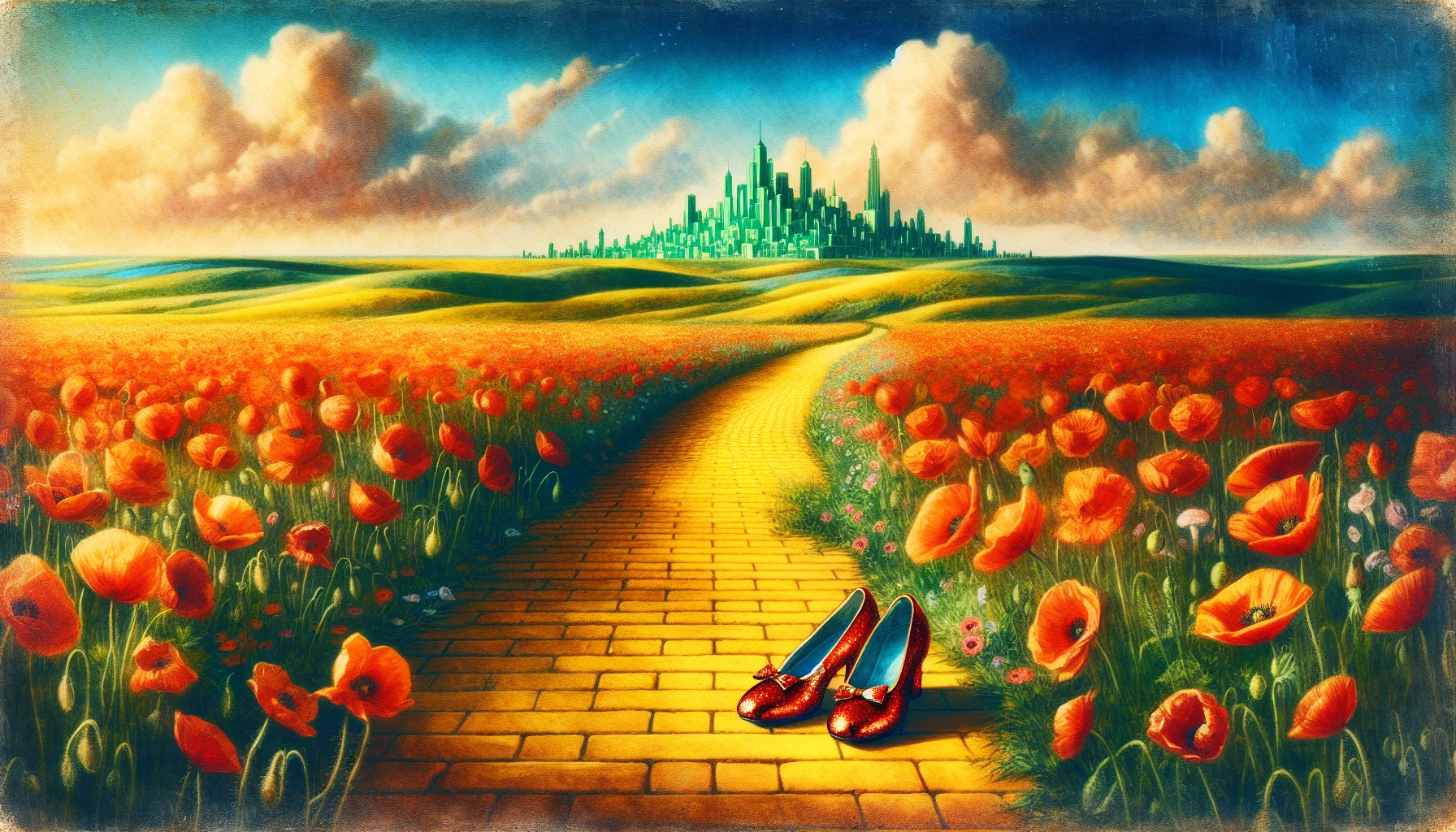
Almost every family knows the Oz story from the 1939 MGM film. Judy Garland, the ruby slippers, the poppy field, "There's no place like home." The film is one of the great American movies and it has been shaping how people picture Oz for nearly 90 years.
Baum's 1900 novel is a different thing. The bones of the story are the same, Dorothy and Toto and the tornado and the yellow brick road and the three companions, but many of the details are different, and the overall spirit of the book is lighter and more matter-of-fact than the film. Reading it aloud, the differences show up quickly and children who know the movie find them interesting rather than disappointing.
It is one of the most accessible classic novels for young children. The sentences are clear and short. The action moves fast. There are no long descriptive passages to wade through. Baum wrote for children and it shows.
What to expect
The original text runs about 60 minutes of audio. Age range is 5 through 10, which is a wider spread than most classics can handle. Five-year-olds follow the story comfortably; ten-year-olds notice the structural choices and the differences from the film. Both groups stay engaged.
The tone is cheerful and adventurous. The dangers in the book, the Wicked Witch, the Kalidahs, the flying monkeys, are present but not dwelt on. Baum never lets the story feel frightening for long. Dorothy herself is competent and calm, which sets a reassuring emotional baseline even when things go wrong around her.
Why it works at bedtime
The book has a clear episodic structure. Dorothy and her companions travel, encounter an obstacle, solve it, move on. That pattern is easy to follow even when a child is getting sleepy, and it makes natural stopping points at the end of most chapters.
The three companions, the Scarecrow, the Tin Man, and the Cowardly Lion, are distinct enough that children track them without effort. They each have one defining trait, and Baum uses that trait consistently. The Scarecrow keeps coming up with plans despite claiming he has no brain. The Lion keeps acting brave despite claiming he's a coward. Children understand this irony early and find it satisfying every time it appears.
The ending is clean and emotionally complete. Dorothy gets home. The companions get what they wanted. There is no ambiguity to work through before sleep.
Recording it
Two minutes of voice recording is all that's needed to produce the full audiobook. No experience required. Most people record on a phone in a quiet room.
The Wizard is a good character for narrators to think about. In the film he's a bumbling old man. In the book he's more genuinely sinister, a skilled illusionist who knows he's a fraud and uses real menace to keep it secret. That doesn't mean you need to play him as frightening, but he works better with a little edge than played purely comic.
Dorothy herself benefits from being narrated as competent and direct. She's not timid or tearful in the original. She handles things. A narrator who plays her as slightly matter-of-fact captures Baum's version better than one who plays her as overwhelmed.
A note on this version
The differences from the film are worth knowing before you start. The magic shoes are silver, not ruby. The ruby slippers were a Technicolor invention by the MGM art department. Glinda does not appear until the end of the book; the good witch Dorothy meets at the beginning is a different character, the Witch of the North. The Wizard is genuinely threatening rather than comic. And the "it was all a dream" framing is absent entirely. Oz is real in Baum's version.
Children who know the film will notice these differences as they come up, and many want to stop and discuss them. "But in the movie..." is a common response. That is not a problem. It tends to make the listening more active, with the child as a kind of expert commentator on the differences.
Baum went on to write 13 more Oz books. He continued the story for another 14 years. Families who enjoy this one often find they want to keep going, which is exactly what he intended.