The Emerald City of Oz: Baum's Intended Finale
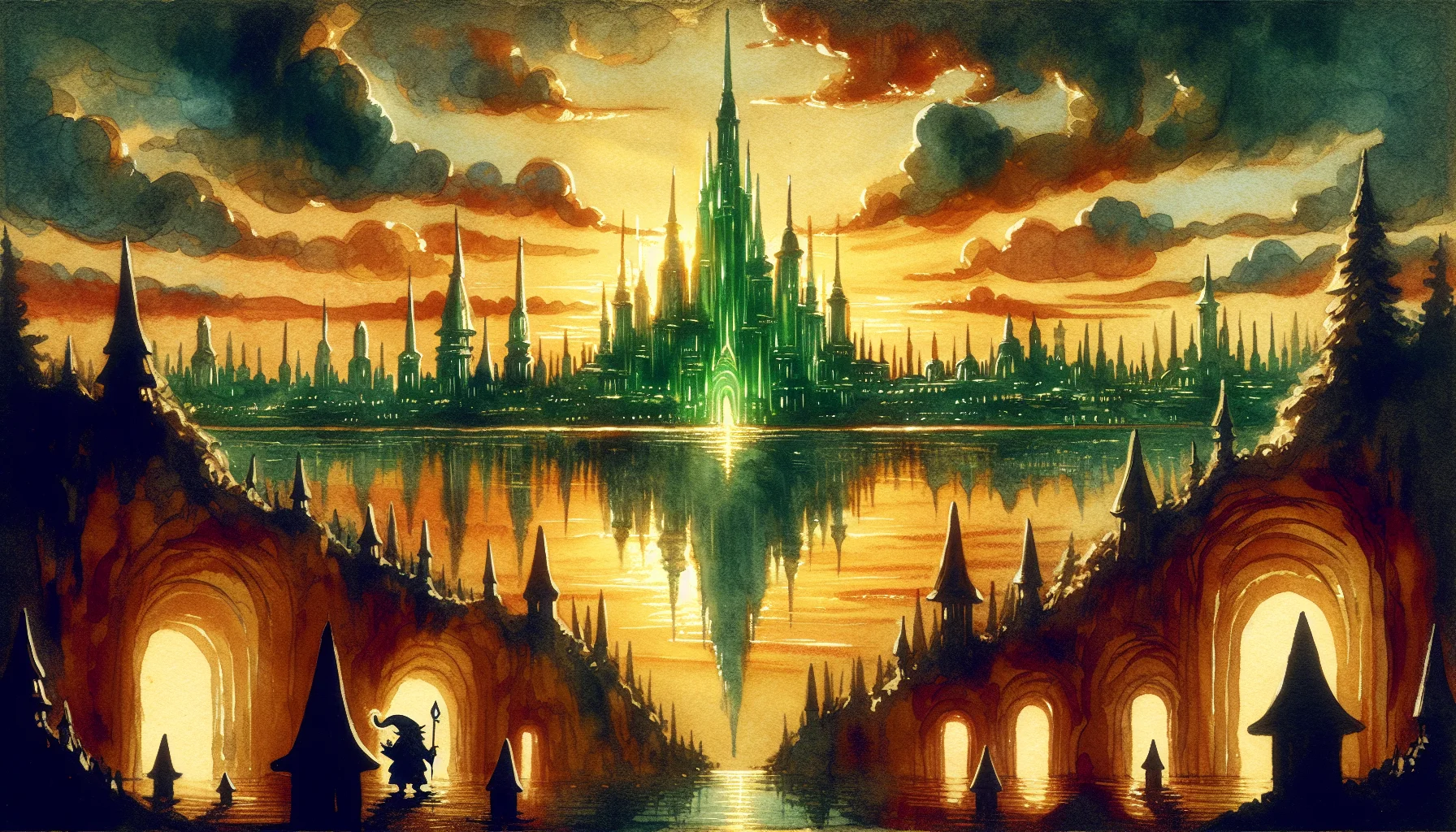
L. Frank Baum published The Emerald City of Oz in 1910 as the sixth book in the series, and as what he intended to be the last. He was tired of Oz, or claimed to be, and designed the ending to close the door permanently on the series. The story moves on two tracks at once: Dorothy's Aunt Em and Uncle Henry are losing their Kansas farm to debt, so Ozma invites the whole family to move to Oz permanently. While Dorothy shows them around the country, the Nome King is underneath it, tunneling toward the Emerald City with an army and a plan for conquest.
The two storylines create an unusual tension. Dorothy's tour of Oz is warm and celebratory, she is showing her family the place she loves, the quilt-patch people and the biscuit village and all the other small wonders Baum invented. Meanwhile, underground, the Nome King is digging closer. Baum cuts between the two threads, and the contrast is sharper than anything else in the series.
Families who choose this one tend to have children who are already deep into the Oz books and want to see how Baum meant it to end. The book has a quiet finality that the later books, written to satisfy demand after Baum relented, cannot quite undo. It feels like a farewell.
What to expect
This audiobook runs about 65 minutes, making it the longest in the Oz catalog so far. It suits ages 6 to 10. The tone shifts between the two storylines: the Dorothy sections are gentle and often funny, the Nome King sections are tense and methodical. Neither extreme is too much for the age range, the Nome King is genuinely dangerous, as he was in Ozma of Oz, but the resolution here is creative rather than violent.
If your family has listened to the first five Oz books, this one rewards that investment directly. Aunt Em and Uncle Henry making sense of Oz, seeing familiar characters through new eyes, is the kind of payoff a long series earns. If you are newer to the series, the Dorothy sections are accessible, but some of the places she visits will mean more with prior books behind you.
Why it works at bedtime
The alternating structure is unusual for bedtime listening, but it works well once a child understands the pattern. The Dorothy chapters are easy, warm stops. The Nome King chapters build pressure that the Dorothy chapters release. The rhythm is almost deliberate, Baum may not have designed it for bedtime, but it functions that way.
The extended tour of Oz's smaller wonders, the places Dorothy visits with her family, are some of the best self-contained chapters Baum wrote. Each is brief and complete. The Utensia chapter, where kitchen utensils have formed their own kingdom, is quietly funny and easy to pause after.
The ending is calm and permanent in a way the other books are not. Oz is protected, and Dorothy's family stays. The finality of it does not feel like a loss, it feels like arrival. That is a good note to end a bedtime session on.
Recording it
Two minutes of natural speech is the recording requirement. The narrator speaks normally, no character voices, no performance required.
This book works particularly well as a personalized audiobook for a grandparent recording for a grandchild, or for any family member who has been a steady presence in a child's life. The central emotional thread of the book, Aunt Em and Uncle Henry finally getting to see the place Dorothy loves, and choosing to stay, is about permanence and belonging. Having that story narrated in a voice the child knows well adds a layer the book is already reaching for.
Do I need to read the earlier books first?
More than any other Oz book, this one is written for readers who have been along for the journey. Baum was saying goodbye to characters he had spent six years developing, and the emotional weight of that is felt most by listeners who know those characters.
You can follow the plot from scratch, the Nome King's plan is explained clearly, and Dorothy's tour is designed to be inviting to newcomers. But the book is richer with the first five books behind you. At minimum, The Wonderful Wizard of Oz and Ozma of Oz give you enough context that the character reunions and the shape of Oz's world will feel familiar. If you have time for the full run before this one, the payoff is proportional to the investment.