Tik-Tok of Oz: Meet One of Children's Fiction's First Robots
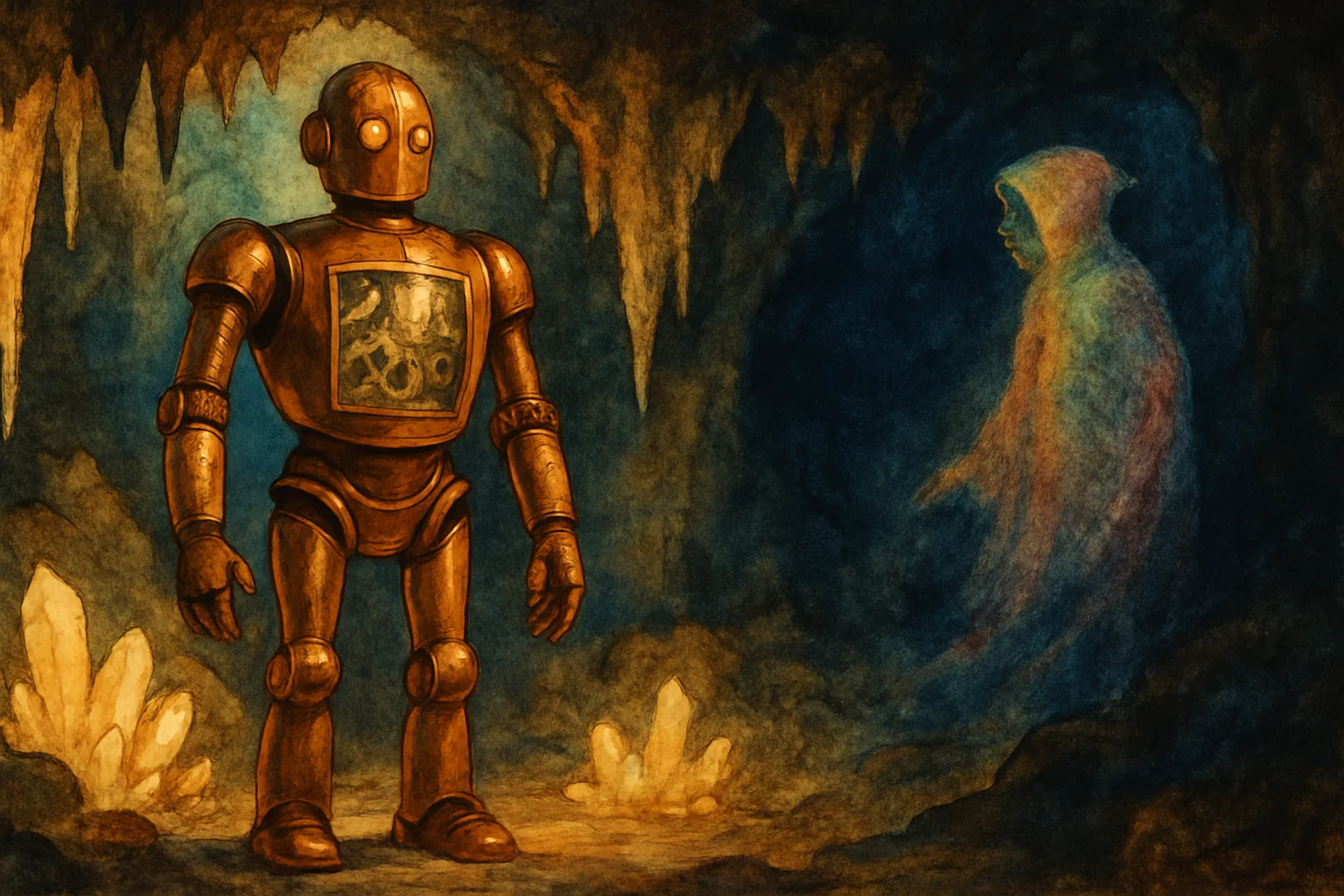
Long before science fiction gave us androids and automata, L. Frank Baum built a copper man who runs entirely on clockwork. Tik-Tok first appeared in the third Oz book, but he earns top billing here in the eighth — and in 1914, a self-winding thinking machine that could walk and talk was a genuinely radical idea to hand a child at bedtime. Tik-Tok of Oz is one of Baum's most inventive outings: a rescue mission, an absurdist army, the daughter of the Rainbow, and a mechanical hero who needs winding up before he can do anything at all.
Three winds and a copper man
What makes Tik-Tok so delightful — and so endlessly funny to read aloud — is his fundamental limitation. He is a machine with three separate mainsprings: one for thinking, one for speaking, and one for moving. They wind down independently, and nobody around him is reliable about keeping track. The result is a character who might stride confidently forward while forgetting entirely what he was doing, or who can think through a problem with great clarity but cannot say a word because his speech-spring has given out. John R. Neill's original illustrations showed a round, tubby copper figure with a face of cheerful blankness — there is no malice in Tik-Tok, no ambition, no fear. He does exactly what he is told, as long as someone remembers to wind him.
That mechanical sincerity turns out to be a surprisingly touching quality in an adventure story. Every other character brings some personal agenda; Tik-Tok just brings faithfulness and a good set of clockwork gears.
The most useless army ever assembled
Running in cheerful parallel to the main quest is Queen Ann Soforth of Oogaboo, who has decided to conquer the world. Her country is tiny — a forgotten corner of Oz that even Ozma barely thinks about — and her army consists of seventeen men. The catch is that every single one of them is an officer. There are no soldiers. General Bunn, Colonel Tik-Tok, Major Blub: the ranks escalate magnificently, and nobody is willing to take an order because everyone outranks everyone else. Baum loved this kind of institutional absurdity, and Queen Ann's campaign is one of his funniest running jokes. Children who have ever argued with a sibling about who is in charge will recognize something painfully true in it.
Betsy Bobbin and Polychrome — two very different travelers
Our human entry point this time is Betsy Bobbin, a girl from Oklahoma who arrives in the underground caves after a shipwreck — she brings along Hank, her mule, who is one of Baum's great comic animals. Betsy is sensible in the way Baum's girl heroes always are: not particularly dazzled by magic, mostly concerned with doing the right thing and getting home to a decent meal.
Polychrome, the Rainbow's daughter, is her opposite: ethereal, dancing, more at home on a cloud than on solid ground. She drifts in and out of the story like a lovely distraction, and her presence gives Baum a chance to be genuinely poetic about color and light. Together, the two of them represent something Baum returned to again and again — the grounded and the magical can travel the same road, and neither one needs to become the other to make the journey worthwhile.
The underground quest and the Nome King
The adventure's real engine is the Shaggy Man's search for his brother, who has been captured and enslaved underground by the Nome King. Baum used the Nomes — small, stubborn, tunnel-dwelling creatures who covet everything above ground — as the nearest thing Oz has to genuine menace. The underground chapters have a different atmosphere from the sunlit Oz stories: darker tunnels, rockier walls, a sense that something unpleasant might be waiting around the next corner. Children who loved the Scarecrow's cheerful meadows will find something properly tense here, without anything genuinely frightening.
The resolution is clever and satisfying — and it rewards the reader who has been paying attention to Tik-Tok's winding problem all along.
Why it works at bedtime
Tik-Tok of Oz runs about fifty minutes as an audiobook, which makes it ideal for a week of bedtime chapters. The tone is consistently playful — even the underground sections have Baum's signature lightness — and the dual storylines (Betsy's quest and Queen Ann's ridiculous campaign) mean there is always something fresh happening. The mechanical humor of Tik-Tok winding down mid-sentence gets funnier every time it happens, and children will start anticipating it with gleeful dread. This is a book that rewards listening.
Do I need to read the earlier books first?
Honestly, not really. Baum helpfully re-introduces Tik-Tok early on, and Betsy Bobbin is brand new so the reader starts at the same place she does. You'll enjoy passing references to Dorothy and Ozma more if you know the earlier books, but the story stands on its own. If your child has heard The Emerald City of Oz or The Road to Oz already, they'll feel at home immediately; if not, they'll catch up within a chapter or two.