Rinkitink in Oz: The Most Self-Contained Oz Book Ever Written
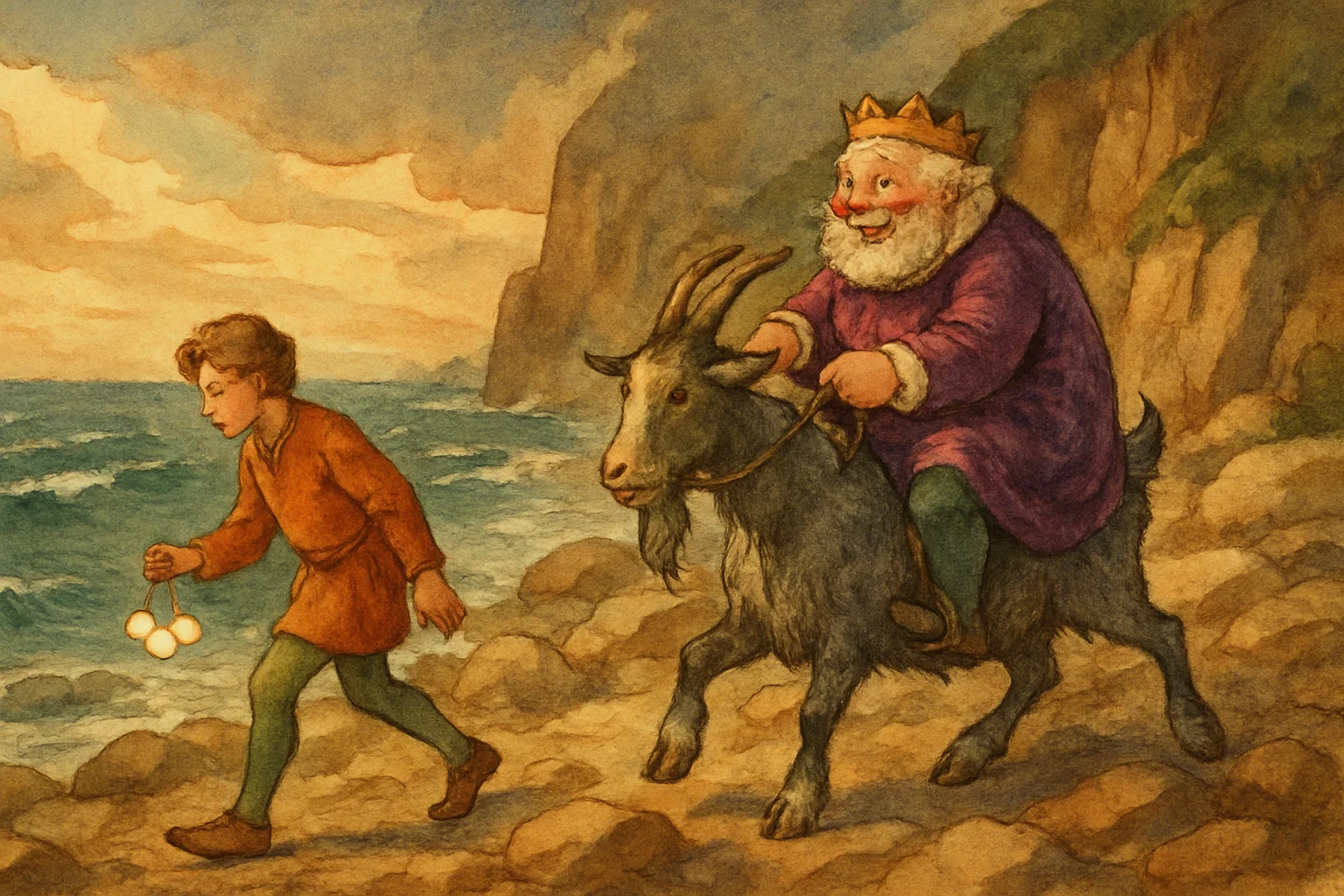
If you handed someone Rinkitink in Oz without telling them it was an Oz book, they might read nearly the entire thing before they noticed. Dorothy and Ozma appear only in the very last chapter — almost as an afterthought, a wave of Ozma's wand to tidy up a problem Inga couldn't quite solve on his own. The rest of the story is set on islands, in fortresses, and underground, in a world that feels older and saltier and more like a Norse saga than a fairy tale about Emerald Cities. That is not a criticism. It makes Rinkitink in Oz one of the most unusual and quietly gripping books in the entire series.
The island of Pingaree and the three pearls
Prince Inga lives on Pingaree, a small island kingdom at the southern edge of the Nonestic Ocean, known mainly for its pearls and its peace. His parents, the King and Queen of Pingaree, are decent, modest people who rule a decent, modest kingdom, and for the first few chapters Baum sketches it with real affection. Then raiders from the islands of Regos and Coregos arrive, destroy the kingdom, and carry away every man, woman, and child into slavery — leaving only Inga, who was playing on the beach when they came.
Hidden in the walls of the ruined palace, Inga finds his inheritance: three magic pearls left by his grandmother. The white pearl grants its holder the strength of ten men. The blue pearl grants the wisdom to see the right course of action. The pink pearl surrounds whoever holds it with a protective force that no weapon can pierce. Each pearl can only protect one person at a time, which means that across the story, Inga must constantly decide who needs what, and when. It is an elegant system — genuinely interesting as a puzzle — and Baum uses it well.
King Rinkitink: the most unlikely hero in Oz
King Rinkitink of Gilgad arrives on Pingaree just before the raid, having sailed away from his own kingdom on a whim. He is fat, jovial, perpetually composing terrible little poems, and laughs far too much at his own jokes. He is also completely useless in a fight and fully aware of it. What makes him one of Baum's greatest comic creations is that he never pretends otherwise — he is not bumbling through incompetence but simply honest about his limitations, which he has apparently made peace with over a long and cheerful life.
His companion is Bilbil, a goat of spectacularly bad temper who despises Rinkitink, dislikes Inga, and has a low opinion of most situations they find themselves in. There is a secret about Bilbil that makes him considerably more interesting than a grumpy goat, and the revelation — when it comes — casts the whole odd partnership in a new light.
A rescue story with real stakes
Inga's mission to rescue his parents and people from the slave islands of Regos and Coregos is one of the more genuinely tense plots in the series. The pearl system means that victories are never total — Inga can be strong, or wise, or protected, but not all three at once, and he is one small boy against fortified islands full of hostile warriors. When the pearls are taken from him in the underground kingdom of the Nomes, the reader feels the danger as something real. This is not a book where the heroes are ever quite safe.
The Nome King sequences have a different atmosphere again — ancient, cold, and deeply unpleasant in the way that only underground kingdoms can be. Baum clearly found the Nomes endlessly useful as a source of real menace, and he uses them here with more economy and effect than in some of the other books.
Why it works at bedtime
Rinkitink in Oz runs about fifty-five minutes and has a brisk, episodic structure that works beautifully in chapters. Each section of the story has its own setting and its own problems, so there is always a natural stopping point and always something to look forward to tomorrow. Rinkitink's cheerful terrible verses are wonderful to hear read aloud — they scan badly on purpose, and Baum clearly had a good time writing them. The emotional core of the story — a young boy, alone, trying to save his family — is simple and universal enough to reach children of five or six, while the puzzle of the three pearls will keep older listeners genuinely engaged.
Do I need to read the earlier books first?
No, and this is the book where that answer feels most true. Because most of the story takes place outside Oz entirely, you do not need to know the Emerald City or Ozma or any of the familiar cast to follow it. When Dorothy and Ozma appear at the end, their presence is brief enough that newcomers will simply understand them as powerful helpers from a nearby magical land. If your child has already enjoyed Ozma of Oz — which also involves the Nome King and has a similar island-rescue energy — they'll feel the resonance keenly. But Rinkitink works just as well as a first Oz book or a standalone adventure.