Rapunzel: A Bedtime Guide for Parents
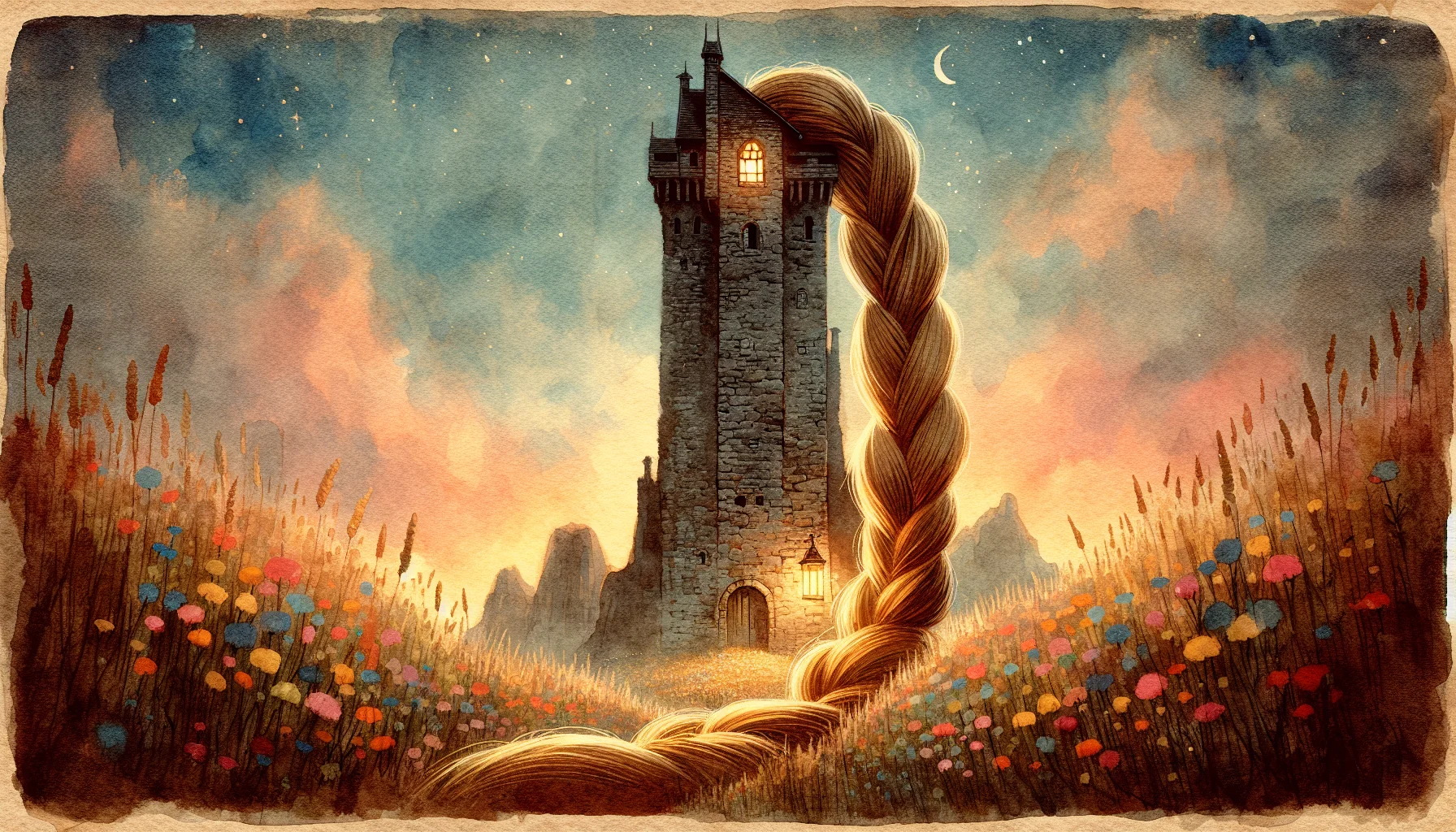
Rapunzel is the story of a girl with impossibly long hair, locked in a tower by the enchantress who raised her, and the prince who eventually finds her there. The tower has no door and no stairs. The only way up is to call out "Rapunzel, Rapunzel, let down your hair" and climb. It is one of those images so vivid it sticks with children for decades, they can picture that tower exactly, even years later.
The story starts before Rapunzel is born. A pregnant woman craves the rapunzel plant growing in the enchantress's garden next door. Her husband steals it for her. He is caught, and the price he pays is the child to come. This opening sets up the whole story: Rapunzel did not end up in the tower by accident, but through a bargain made before she was old enough to have any say in it. Children feel the unfairness of that immediately.
At ten minutes, this is the shortest story in the Classic Kid Lit catalog. It is a complete, satisfying story, not a fragment, but it fits into the tightest bedtime slots without rushing.
What to expect
Running roughly 10 minutes, Rapunzel is a good choice when you are starting late or want something that will not carry past a young child's attention span. Age range is 4 to 7. The story has genuine feeling, loneliness, longing, discovery, loss, reunion, and children respond to all of it, but it moves quickly enough that even restless listeners stay with it.
The tone is wistful and a little melancholy in the middle section, then resolves warmly. It is not a suspenseful story so much as a sad one that finds its way to happiness. Kids who have seen Tangled will recognize the setup immediately, though the original plays out quite differently.
Why it works at bedtime
The tower is inherently a bedtime image, enclosed, still, quiet, cut off from the world. A good portion of the story takes place in that space, and the narration reflects its quality. It is not an action story. It is a story about waiting and longing and connection found across an impossible distance.
The ending brings Rapunzel and the prince together in a faraway land where they live happily ever after. It is not an elaborate resolution, it is simple and complete. The enchantress is gone from their lives. The suffering is over. Children who have followed the sadness of the middle portion feel the warmth of that ending keenly, and it is a good place to close their eyes.
Recording it
At 10 minutes, this is the easiest story in the catalog to record in terms of commitment. The recording itself is about 2 minutes of your own voice, Classic Kid Lit uses that sample to produce the full narration in your voice. The process takes less time than a phone call.
Rapunzel is a particularly good choice for parents who are deployed or far from home. A 2-minute recording can be done from almost anywhere, and the finished audiobook gives children a bedtime connection to a parent who is not in the room. The story's own themes, longing across distance, love that persists, make that pairing feel natural rather than accidental.
A note on this version
The Grimm's original contains a subplot that most modern retellings quietly remove: Rapunzel eventually becomes pregnant by the prince, and the enchantress discovers this before Rapunzel does. This detail is the reason the enchantress cuts Rapunzel's hair and banishes her, it is the betrayal she cannot forgive.
The version used in this audiobook is family-appropriate. The pregnancy subplot is not included. The enchantress discovers the prince's visits through other means, cuts the hair, banishes Rapunzel, and blinds the prince when he returns. Everything that follows, the wandering, the reunion, the prince's sight restored by Rapunzel's tears, is told in full. The story is complete; it simply handles that one element in the way most children's publishers have handled it for the past century.