The Magic of Oz: The Magic Word No Child Can Pronounce
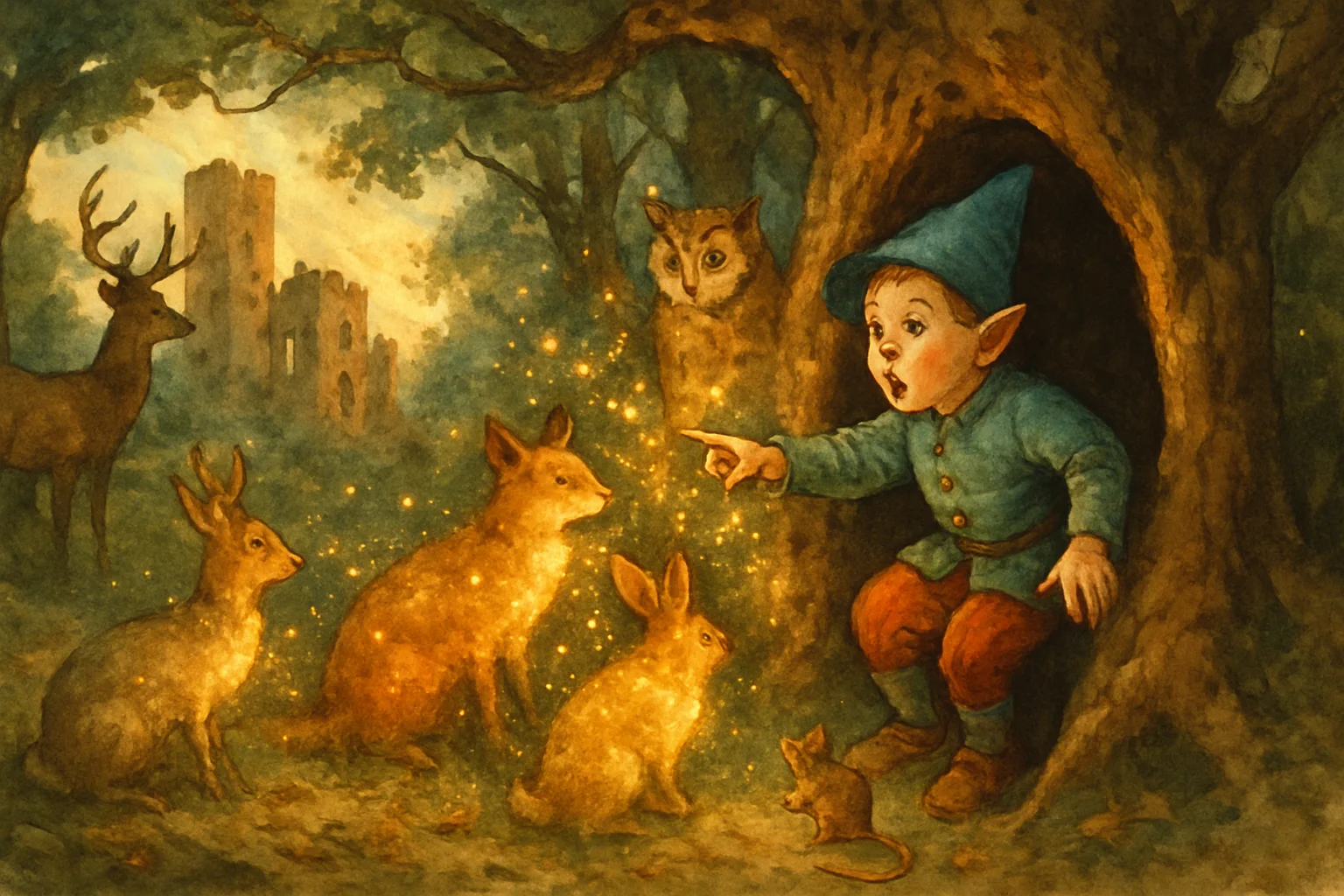
The magic word in The Magic of Oz is Pyrzqxgl. Go ahead and try to say it. Baum clearly invented it with a child's delight in tongue-tying nonsense — a word that looks like a sneeze and performs like a miracle, capable of transforming anyone into any animal or object the speaker names. Finding such a word in an old book on a forgotten mountaintop is exactly the kind of thing that should happen to a bored Munchkin boy with too much imagination and not quite enough judgment. And it does.
Kiki Aru and the old Nome King
Kiki Aru lives on the top of a mountain with a father who is a strict recluse, and he has spent his childhood gazing down at the world below and wanting to be part of it. When he discovers the magic word in his father's hidden books, he runs away with it — intending, in a vague teenage way, to use it to make himself important. He transforms himself into a hawk to travel, and this is where Ruggedo finds him.
Ruggedo, the Nome King of several earlier books, was stripped of his powers and expelled from his underground kingdom when Dorothy used the magic belt to defeat him. He has been wandering the surface world as an ordinary old man — no magic, no subjects, no jewels, burning with resentment. When he encounters a boy who can transform people into animals, he immediately recognizes an opportunity. His plan is to use Kiki to turn a vast forest's worth of animals into warriors — tigers and bears and lions who walk and fight — and then march them to the Emerald City to conquer Oz. Kiki, young and flattered, goes along with it.
The partnership is one of the book's best running jokes. Ruggedo is devious, experienced, and persuasive; Kiki is powerful, naive, and just perceptive enough to keep wondering whether the old man is actually trustworthy. The answer, as any child will know immediately, is no — but watching Kiki slowly arrive at this conclusion is entertaining.
Dorothy, the Wizard, and the birthday problem
Running in cheerful parallel to the conspiracy is Ozma's approaching birthday, and the very Oz-like problem of what to give someone who rules a magical kingdom where everyone has everything they need. Dorothy and the Wizard head off to find a gift worthy of Ozma, and their search takes them to a remarkable place: a magical island that grows in the middle of a forest, populated by animals who tend it like a living garden. The island is extraordinary, and the question of how to bring it to the Emerald City as a birthday present is a genuinely charming puzzle. The birthday subplot keeps the tone light and warm even as Ruggedo's scheme darkens the main story.
The transformation sequences
Pyrzqxgl is wonderfully versatile as a plot device because the transformations it produces can be played for pure comedy. Ruggedo's animal army is funny in concept — a bear in military formation, a tiger trying to look menacing while also clearly just being a tiger — and Baum milks it with affection. When the Wizard and Dorothy start countering the magic with their own, the resulting chaos of half-transformed creatures and mis-spoken words gives younger listeners exactly the kind of delightful slapstick the series does best.
The resolution turns on the magic word itself, in a way that rewards the attentive listener who has been paying attention to exactly how Pyrzqxgl works and what its rules are. Baum plays fair with his magical systems, and children who notice things will feel very satisfied.
Why it works at bedtime
The Magic of Oz runs about fifty minutes — short and brisk, ideal for listeners who are not quite ready for the longer books. The two storylines (the conspiracy and the birthday quest) create a comfortable rhythm: something tense, then something warm, then something tense again. The magic word itself becomes a game; children will try to pronounce Pyrzqxgl all week and will not quite manage it, which is exactly the point. Baum published this in October 1919, five months after he died in May of that year. He wrote it knowing he was ill, and there is something generous and deliberate in its lightness — a man who loved making children happy, finding ways to do it one more time.
Do I need to read the earlier books first?
Kiki Aru is a new character, so his thread is easy to follow cold. Ruggedo's full menace as a villain is much better appreciated by readers who know him from Ozma of Oz and the later books, but even without that background he registers clearly as someone not to be trusted. The birthday party subplot rewards familiarity with the cast, but can be enjoyed as a pleasant Oz adventure on its own. This is, overall, a more accessible book than its neighbors in the series — a good choice if you want to try the later Oz books without committing to reading them in order.