The Lost Princess of Oz: Baum's Best Whodunit
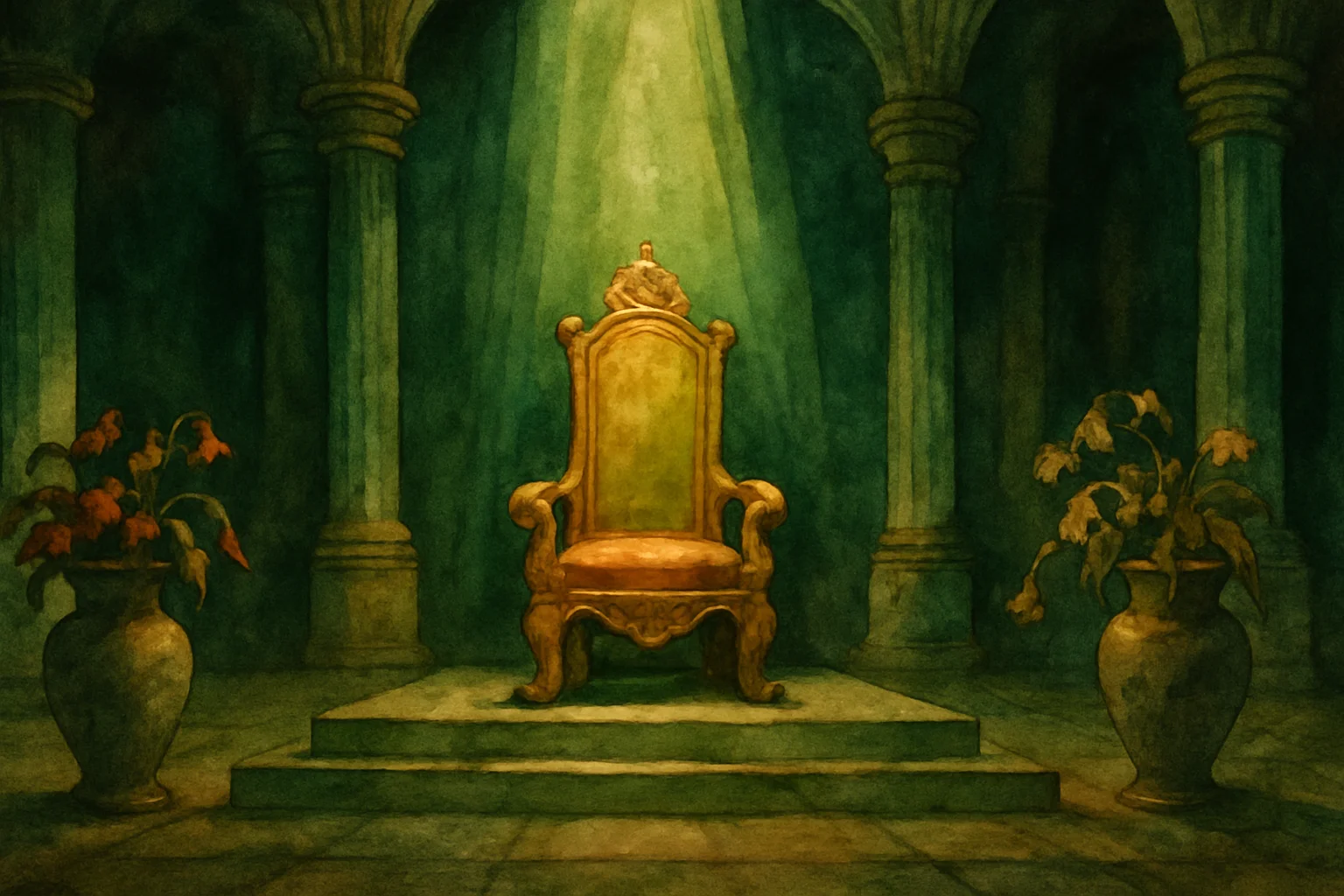
In every Oz book up to this point, Ozma has been the fixed point around which the story revolves. She is always there in the Emerald City — serene, capable, solving problems with her Magic Picture and her good judgment. She is Oz's guarantee that things will be all right. So when she vanishes overnight in The Lost Princess of Oz, along with every magical tool in the palace, the shock is real. Baum has spent eleven books establishing the rules, and now he has broken one of the most fundamental of them. What happens when the person who fixes everything cannot be found?
The theft and the two search parties
The morning after Ozma disappears, Dorothy discovers that the Magic Picture — Ozma's all-seeing window on the world — is gone too. So is Glinda's Great Book of Records. So are the Wizard's black bag of magic tools, the Magic Belt, and every other significant magical object in Oz. The theft is total and deliberate, and it immediately establishes a mystery structure rather than the usual adventure one. Someone has planned this. Someone wanted Oz blind as well as leaderless.
Two separate search parties form and set off in different directions. Dorothy leads the main group — the Wizard, the Scarecrow, Toto, the Cowardly Lion, the Hungry Tiger, and an assortment of others — heading into the wild, unmapped regions of the Gillikin Country. Meanwhile, Cayke the Cookie Cook of the Yip Country has her own quest: her magic diamond dishpan has been stolen at the same time, and she sets off with the Frogman (who is very large, very wise, and very vain about his wisdom) to find it. The two threads weave together gradually, each illuminating something the other has missed.
Ugu the Shoemaker: villainy from unexpected places
The villain, when he is finally revealed, is one of Baum's most interesting. Ugu the Shoemaker is a Munchkin — one of the small, cheerful people of the eastern quadrant of Oz, not normally associated with dark ambitions. But Ugu has spent years studying forgotten magic in old books, collecting fragments of power, waiting for the moment to strike. His motivation is simple: he wants to be the most powerful person in Oz. The fact that Oz already has a benevolent ruler he would have to destroy to accomplish this does not trouble him. It is a surprisingly recognizable brand of ambition — not evil for its own sake, but utterly indifferent to the cost to everyone else.
Baum rarely makes his villains interesting. Ugu is an exception, and it gives the eleventh book a sharper edge than many of its predecessors.
The Lavender Bear, the Little Pink Bear, and Button-Bright
Amid the mystery, Baum gives the reader two of the most purely delightful characters in the series. The Lavender Bear is a large stuffed bear who happens to be alive and serves as the king of a small bear country. He carries a tiny Pink Bear in his chest, and this Little Pink Bear has one remarkable property: it can only tell the truth. Ask it a question, and it answers — not helpfully, not unkindly, just accurately. It cannot lie and has apparently never wanted to. Children find this enormously funny, and the scenes where the Little Pink Bear is consulted as an oracle have a wonderful deadpan comedy.
Button-Bright, the perpetually-lost child of the series, manages to get himself transformed into a fox by the Lavender Bear's magic — not deliberately, just through the sort of casual misadventure that follows Button-Bright everywhere. His cheerful acceptance of being a fox for a while is one of those small Baum touches that has no plot significance whatsoever and is therefore exactly right.
Why it works at bedtime
At twenty-six chapters and roughly eighty minutes, The Lost Princess of Oz is the longest book in the series, which makes it the best choice for a longer-than-usual bedtime run. Two weeks of chapters, and almost every chapter ends at a natural break in the mystery — a new discovery, a new piece of the puzzle. The whodunit structure is rare in children's fantasy, and children who enjoy mysteries will find it particularly satisfying: the clues are present, the logic holds, and the solution, when it comes, feels earned rather than arbitrary. This is Baum operating at full power.
Do I need to read the earlier books first?
More than most, yes. The emotional impact of Ozma's disappearance depends on knowing who she is and what she means. The best preparation is The Land of Oz, which tells her origin story, and The Emerald City of Oz, which established her as the series' center of gravity. If your child knows those two, they will feel the stakes of this book in their bones. The mystery itself can technically be followed without that background, but the emotional weight — what it means for Oz to lose its heart — will be considerably lighter.