Hansel and Gretel: A Bedtime Guide for Parents
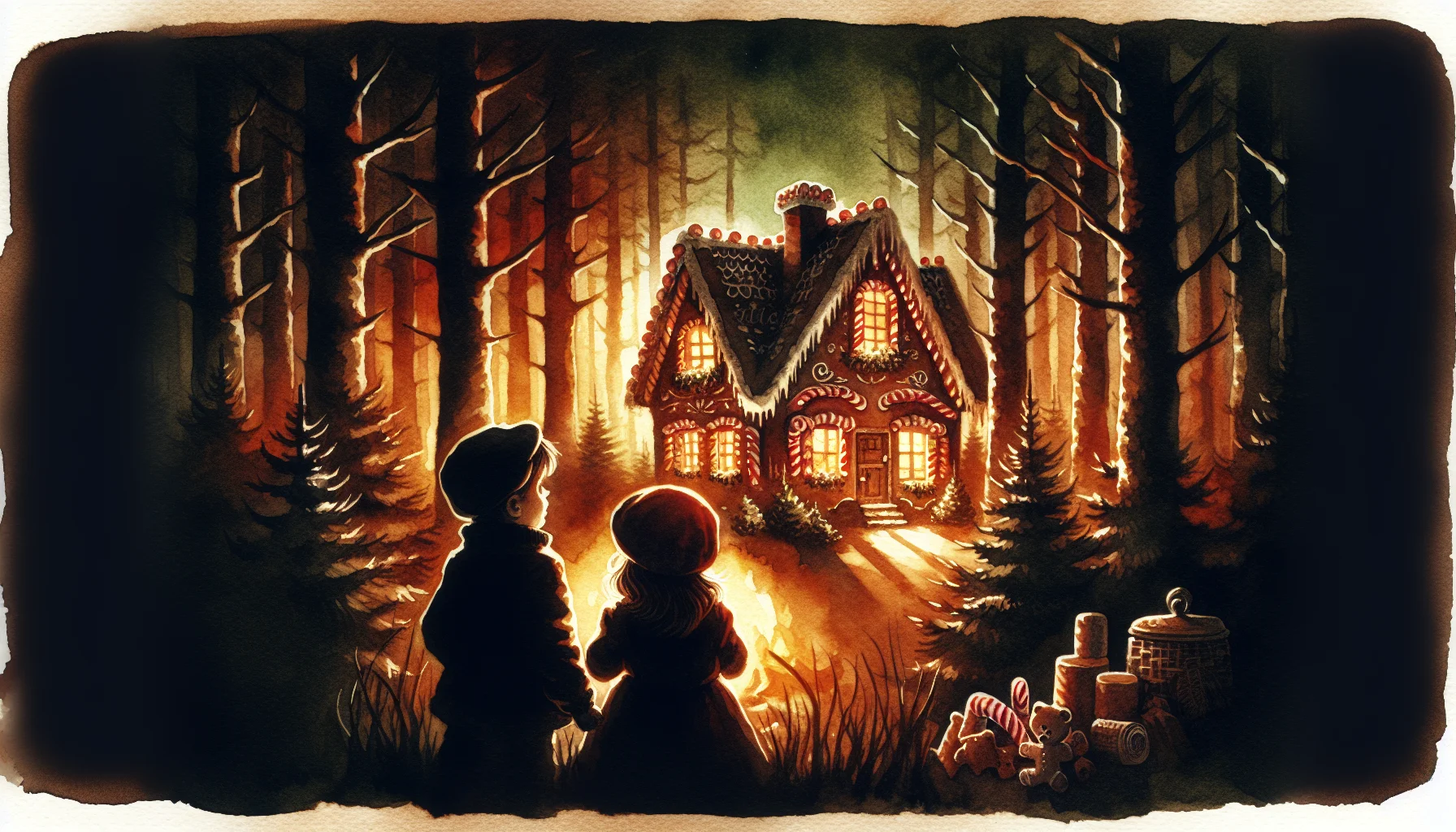
Hansel and Gretel has been scaring and delighting children for over two hundred years, and it has survived for a reason. Two kids are abandoned in a forest, find a house made of candy, and outwit the witch who wants to eat them. It is a story about siblings trusting each other, being clever under pressure, and finding their way home. Those are ideas that hold up.
The Grimm brothers first published this one in 1812, and it carries the weight of something ancient. The forest is genuinely menacing. The witch is genuinely dangerous. That darkness is not incidental, it is what gives the children's bravery its meaning. When Gretel pushes the witch into the oven, you feel the release because the threat was real.
It is worth knowing before you press play that this version is somewhat darker than what most children encounter in picture books or animated retellings. The danger feels more immediate. Most kids handle it well, but it is good to know what you are putting on.
What to expect
The story runs about 15 minutes at a natural pace. That is a single sitting for almost any child who is old enough to follow a narrative. Age range is roughly 4 to 8, though 5 and up is the sweet spot, younger children may find the abandonment in the forest unsettling. Kids who already love slightly spooky stories are often the most enthusiastic audience.
The tone is suspenseful, not cozy. There are a few genuinely tense moments: the children realizing they are lost, Hansel in the cage, Gretel facing the witch alone. But the resolution is decisive and satisfying, and the children return home with treasure.
Why it works at bedtime
The story has a very clear shape: home, forest, danger, escape, home. That structure gives children something to hold onto. They may feel anxious during the witch scenes, but they can sense where the story is going, and it gets there.
The ending is unambiguous. The witch is gone, the father is overjoyed, the family is reunited. There is no ambiguity left hanging. For most children, that clean resolution outweighs the tension that preceded it, they settle quickly after it wraps. If your child is on the sensitive end, read through the story yourself first and decide. But in our experience, children generally want this one again before the week is out.
Recording it
Hansel and Gretel is a smooth recording assignment. The story has two main child characters and a witch, but the narrator does not need to perform distinct voices for each, a single warm, expressive reading is all that is needed. The names are easy to pronounce and there are no foreign words to trip over.
The recording is about 2 minutes of your own voice. That sample is what Classic Kid Lit uses to produce the full narration. You do not read the whole story, you just talk naturally for a couple of minutes, and the AI does the rest in your voice. The whole recording process takes less than 10 minutes on a phone.
A note on this version
Most modern picture book versions soften two things that the Grimm's original does not: the role of the parents, and the witch's fate. In the original, it is the children's own mother (later revised to a stepmother in subsequent Grimm editions) who insists they be abandoned in the forest. And at the end, Gretel does push the witch into the oven, that is not implied or off-page, it happens in the text.
The version used here is faithful to the Grimm's text without being gratuitous about either moment. The parental abandonment is handled plainly, and the witch's end is brief. If you have read a bowdlerized picture book version to your child, this one will feel more substantial. That is the point.